

Breathing trouble, collapse, uncontrolled bleeding, poisoning, and sudden inability to urinate are not problems to monitor until a convenient appointment. You will be able to sort urgent warning signs from routine concerns, give safe first aid, and transport your pet without making the condition worse.
Key takeaways
- Seek immediate care for breathing trouble, collapse, blue gums, or severe weakness.
- Treat repeated seizures, toxin exposure, and uncontrolled bleeding as emergencies.
- Do not induce vomiting or give human medicine unless a veterinarian directs you.
- Keep cats, rabbits, birds, and guinea pigs warm, quiet, and safely restrained during transport.
How can you tell whether your pet needs emergency care now?
Use a pet emergency checklist: if breathing, circulation, consciousness, or strength is abnormal, seek immediate veterinary care rather than waiting for a routine appointment.
1. Watch breathing and responsiveness. Rapid, laboured, noisy, or abnormal breathing, open-mouth breathing in a cat, collapse, unresponsiveness, extreme weakness, or inability to stand can signal oxygen deprivation or shock. A sudden behavioural change also counts, especially if your pet becomes confused, withdrawn, or difficult to wake.
2. Lift the lip and inspect the gums. Pale gums in pets, white gums, gray gums, or blue gums are emergency signs. Press a pink area, release it, and measure capillary refill time in dogs and cats: colour should return in about two seconds. Longer refill, cold extremities, or weak pulses indicates poor circulation.
3. Look for uncontrolled bleeding, severe pain, repeated straining without urination, or a suddenly enlarged, tight abdomen. These signs can reflect internal bleeding, urinary obstruction, dehydration, organ damage, or shock. Rapid worsening makes any symptom more urgent.
4. A mild, stable symptom—with normal breathing, pink gums, normal walking and urination, manageable pain, and no deterioration—can be documented with photos, times, and food or water changes for a routine appointment. If unsure, call a veterinarian now; waiting is riskier when any checklist warning appears.
Which visible signs mean you should leave for a veterinarian immediately?
Open-mouth breathing in a cat, marked abdominal breathing effort, blue or gray gums, collapse, unresponsiveness, choking, sudden paralysis, or inability to stand means leave for a veterinarian immediately. Do not watch for improvement; handling and exertion can worsen oxygen deprivation or shock.
| Visible sign | What it may indicate | What to do |
|---|---|---|
| Breathing distress, blue or gray gums, collapse | Oxygen failure or shock | Keep the pet quiet and transport now |
| Heavy or spurting bleeding | Rapid blood loss | Seek emergency care immediately |
| Vehicle impact, fall, attack, or blunt chest or abdominal injury | Internal bleeding, lung injury, shock, or fractures | Treat as a pet trauma emergency, even if the pet walks |
| Tight swollen abdomen with retching, drooling, restlessness, weakness, or collapse | Gastric dilatation-volvulus, commonly called pet bloat | Go now; there is no reliable home treatment |
A cat repeatedly straining with little or no urine may have a cat urinary blockage, which can become fatal quickly. Heatstroke also requires immediate care: move your pet from the heat, apply cool—not ice-cold—water, and leave for veterinary assessment. Ice and aggressive cooling can reduce surface blood flow and interfere with heat loss.
Keep fingers away from a choking pet’s mouth, and do not delay for a routine appointment after any of these signs.
What time thresholds turn seizures, vomiting, poisoning, and injuries into emergencies?
A seizure lasting five minutes is an emergency. Go immediately if seizures repeat without normal recovery, or if one follows toxin exposure, trauma, breathing trouble, or severe weakness. During the episode, clear nearby objects, do not restrain the pet, and keep your hands away from its mouth.
Persistent vomiting in pets or diarrhea needs urgent assessment when it includes:
- Blood, repeated unproductive retching, abdominal pain, or a swollen abdomen
- Inability to keep water down, collapse, marked lethargy, or rapid dehydration
- A young, elderly, pregnant, very small, or medically fragile patient
Call a veterinarian or animal poison-control service immediately for suspected poisoning. Have the product container, ingredient list, estimated amount, and exposure time ready. Pet poisoning first aid does not mean giving milk, oil, salt, or inducing vomiting; these actions can worsen burns, toxicity, or aspiration.
Treat a painful eye, sudden vision loss, severe squinting, a protruding eyeball, or chemical exposure as a pet eye injury emergency. Flush chemical exposure with clean water or saline while contacting veterinary help, and do not apply creams or force the eye open.
During labour, strong contractions without a puppy or kitten, a visible fetus without progress, weakness, or collapse requires emergency care. Do not pull a lodged fetus or give oxytocin without veterinary direction. Any injury causing uncontrolled bleeding, collapse, breathing difficulty, or inability to stand also exceeds routine monitoring.
How do emergency signs differ in cats, rabbits, guinea pigs, birds, and other pets?
Cats often hide serious disease until they are critically ill; hidden illness in cats may become visible only through open-mouth breathing, repeated litter-box straining, hiding, weakness, or sudden withdrawal. Do not wait for a cat to look dramatically sick.
| Species | Emergency signs | Why waiting is risky |
|---|---|---|
| Cats | Open-mouth breathing, repeated straining with little or no urine, sudden hiding, weakness, or withdrawal | Breathing failure or urinary blockage can rapidly cause oxygen deprivation, kidney injury, and dangerous electrolyte changes |
| Rabbits | Reduced eating, fewer droppings, hunched posture, abdominal discomfort, or unusual quietness | Rabbit emergency signs can mark gut stasis, dehydration, pain, or shock |
| Guinea pigs | Eating less, producing fewer droppings, sitting hunched, abdominal discomfort, or reduced activity | Guinea pig emergency care may be needed before dehydration and gut stasis become severe |
| Birds | Fluffed feathers, sitting on the cage floor, tail bobbing, open-mouth breathing, weakness, or reduced responsiveness | Bird emergency symptoms often appear only after significant illness, so deterioration can be rapid |
| Other small or exotic pets | Sudden changes in eating, breathing, mobility, droppings, posture, or responsiveness | Small animals can worsen quickly while still appearing deceptively calm |
Treat any sudden change in a rabbit, guinea pig, bird, or other exotic pet as urgent. Normal-looking behaviour does not reliably exclude serious illness; contact a veterinarian promptly rather than waiting for a routine appointment.
What should you do while transporting a pet to urgent veterinary care?
Call the receiving hospital while leaving. Describe the signs, when they began, and your estimated arrival time. This helps the team prepare for emergency veterinary triage rather than treating the visit like a routine appointment.
- Keep a breathing-distressed pet quiet; use a carrier, or a flat makeshift stretcher for a large or injured animal.
- After trauma, minimise movement of the head, neck, and spine. Keep the pet warm unless overheating is the problem.
- Bring suspected toxin packaging, ingredient details, estimated amount, and exposure time.
For what not to give a sick pet, avoid ibuprofen, naproxen, acetaminophen, food, water, milk, oil, salt, and other home remedies unless directed. Do not induce vomiting, remove embedded objects, pull a lodged fetus, apply creams to injured eyes, force food or water, restrain a seizure, or put fingers near the mouth.
| Emergency visit | Routine appointment |
|---|---|
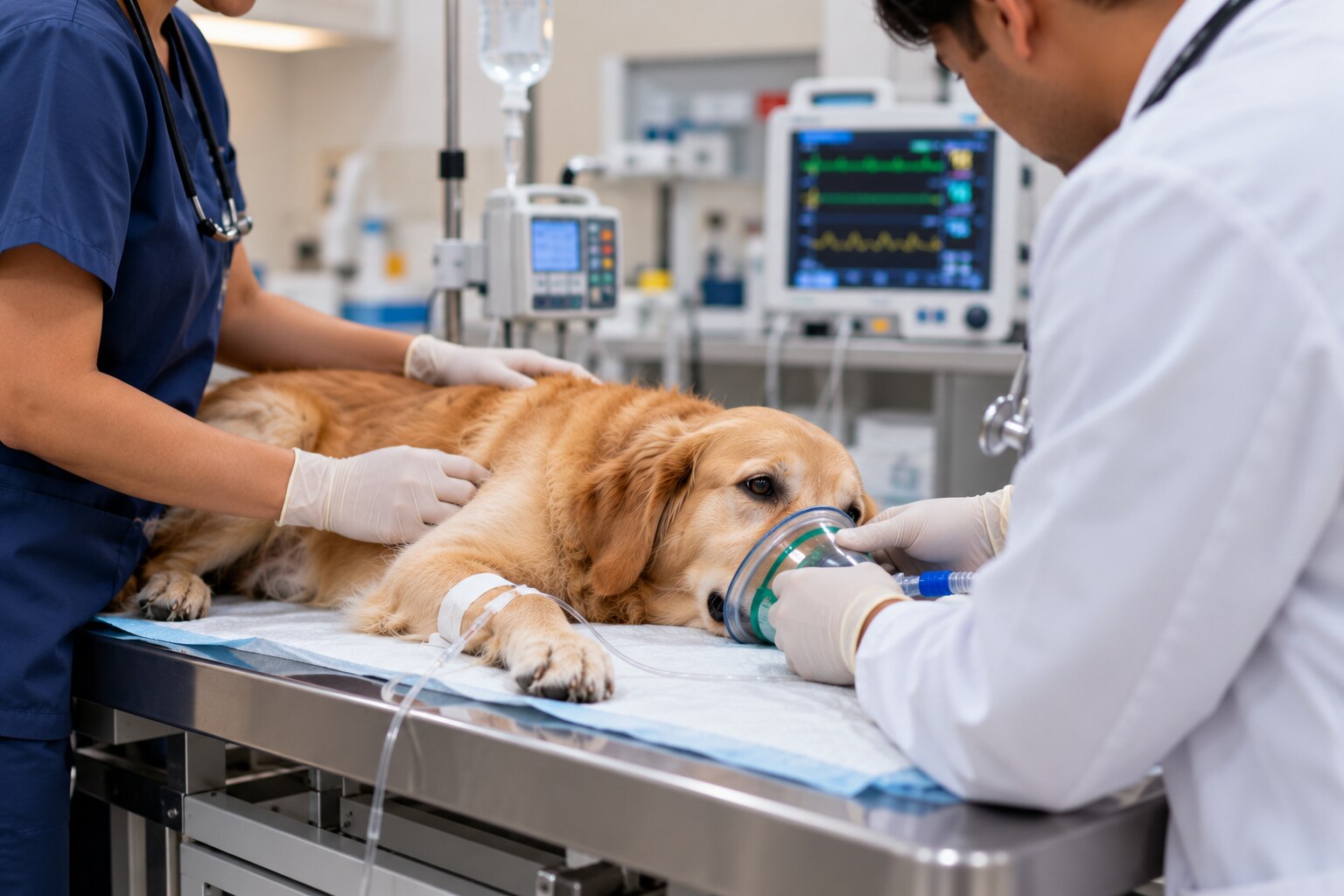
| Breathing, circulation, shock, pain, or collapse are assessed first; imaging, blood tests, urine testing, or surgery may follow. | A stable problem permits history-taking, examination, and planned testing without immediate stabilisation. |
Pet Care Hospital- Best Pet Clinic in Dwarka is a veterinary care in Dwarka option to call about availability and urgent assessment; confirm its current emergency arrangements before travelling.
Frequently asked questions
How can you tell whether your pet needs emergency care now?
Seek emergency veterinary care when breathing is difficult, consciousness is abnormal, circulation is failing, or your pet cannot stand or walk normally. Collapse, blue or grey gums, severe weakness, and uncontrolled bleeding are urgent signs.
Which visible signs mean you should leave for a veterinarian immediately?
Leave immediately for laboured breathing, repeated collapse, unresponsiveness, seizures lasting five minutes or longer, heavy bleeding, a swollen painful abdomen, suspected poisoning, heatstroke, or a serious injury.
What time thresholds turn seizures, vomiting, poisoning, and injuries into emergencies?
A seizure lasting five minutes, repeated seizures without normal recovery, vomiting with collapse or blood, any suspected toxin exposure, and injuries with breathing trouble or uncontrolled bleeding require immediate care. Do not wait for symptoms after a known poisoning.
How do emergency signs differ in cats, rabbits, guinea pigs, birds, and other pets?
Cats often hide severe illness, so open-mouth breathing, sudden weakness, or repeated litter-box straining is urgent. Rabbits and guinea pigs need prompt care for not eating, few or no droppings, bloating, or breathing difficulty. Birds require immediate attention for open-mouth breathing, tail bobbing, bleeding, or sitting fluffed and unresponsive.
What should you do while transporting a pet to urgent veterinary care?
Call the clinic while leaving, use a secure carrier, keep your pet quiet and warm unless overheated, and bring packaging for any suspected toxin. Do not force food, water, medication, or vomiting treatment unless the veterinarian instructs you.