

Itching, bald patches, redness, pustules, and repeated infections are signs, not diagnoses. You will learn how to spot emergencies, understand the tests a veterinarian may use, follow treatment safely, and prevent the cycle from returning.
Key takeaways
- Tail-base itching and flea dirt point toward flea allergy dermatitis.
- Skin scrapings, cytology, cultures, and allergy testing identify recurring causes.
- Treat the underlying parasite, infection, allergy, or hormonal disorder—not itch alone.
- Follow contact times and dosing instructions for every prescribed skin treatment.
Which itchy-skin signs need urgent care, and what patterns suggest the cause?
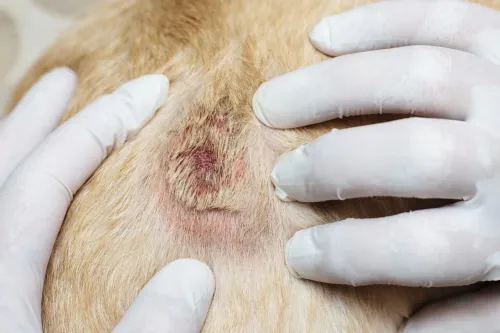
An itchy dog skin problem is a sign, not a diagnosis. Flea allergy dermatitis can cause extreme itching even after grooming removes visible fleas; check for flea dirt, tail-base irritation, and chewing. The pattern guides testing, but appearance alone cannot prove the cause.
| Cause or pattern | Clues to notice | Important limitation |
|---|---|---|
| Fleas or mites | Mites can cause intense itching, crusts, ear-edge lesions, or widespread hair loss. Demodex often causes patchy hair loss and scaling, with less itch unless infection develops. | A negative flea check or scraping does not always exclude parasites. |
| Bacterial pyoderma symptoms | Pustules, crusts, redness, pain, or a rancid odour. | Recurrent infection often reflects an unresolved trigger. |
| Malassezia yeast | Greasy skin, darkening, a musty smell, and persistent ear-and-paw itching. | It commonly accompanies allergy or another skin-barrier problem. |
| Ringworm | Circular hairless, scaly patches. | It can spread to people and other animals. |
| Allergy | Food or environmental allergy often causes recurring paw, ear, face, or belly itching. | Atopic dermatitis is diagnosed only after other causes are excluded. |
| Hormonal disease | Symmetrical hair loss, thin skin, increased thirst or urination, and weight or appetite changes. | Persistent licking can also become behavioural after pain or irritation. |
Seek urgent veterinary care for:
- Facial swelling or breathing difficulty
- Rapidly spreading redness, pus, severe pain, fever, or weakness
- Extensive peeling or bleeding
- Scratching the dog cannot stop
Hair regrowth usually takes weeks to months, even when itching improves within days.
How does a veterinarian investigate recurring skin disease?
Treating redness alone fails because redness is a sign, not a diagnosis. Steroids can hide infection, while repeated antibiotics can select resistant bacteria and leave fleas, mites, allergy, or hormonal disease untreated.
A proper history includes:
- Flea and tick prevention for every dog and cat in the household
- Onset, recurrence, and seasonality
- Diet, treats, flavoured medicines, and access to other animals’ food
- Medications, shampoos, travel, and contact with affected animals
- Previous antibiotic, antifungal, or steroid use
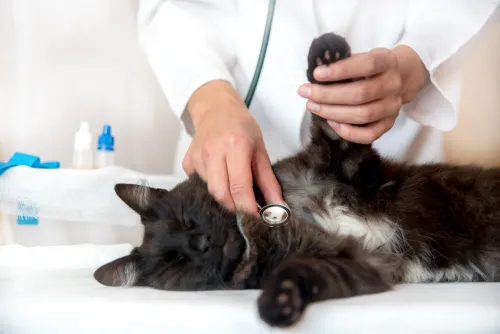
The veterinarian examines the ears, paws, nails, skin folds, belly, tail base, and the distribution of lesions. A flea comb can reveal flea dirt even when grooming has removed adult fleas.
Testing is selected from the pattern:
- Deep skin scraping for mites or hair examination helps investigate Demodex. Sarcoptes mites are harder to find, so a negative scraping does not exclude sarcoptic mange when exposure and lesions fit.
- Dog skin cytology uses tape preparations, impression smears, or swabs to identify cocci, rods, inflammatory cells, and Malassezia yeast during the appointment.
- Ringworm testing dogs may require hair examination, fungal culture, or molecular testing.
- Bacterial culture matters for deep pyoderma, rod-shaped bacteria, recurring disease, or treatment failure.
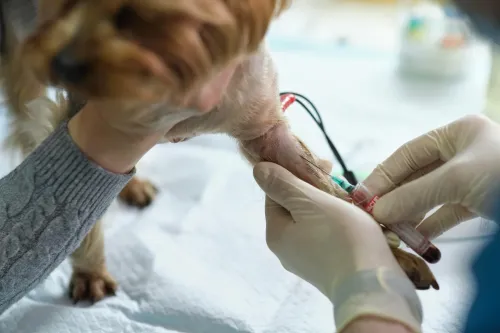
- Blood tests, endocrine testing, or biopsy may investigate symmetrical hair loss, immune disease, unusual lesions, or hormonal disease.
A dog elimination diet trial requires at least eight weeks of only the prescribed novel-protein or hydrolyzed diet, followed by a controlled rechallenge.
What treatments target the cause instead of masking the itch?
Treatment works when it follows the trigger, not merely the redness. Match the plan to the suspected disease:
- Fleas or flea allergy: reliable dog parasite control must cover every dog and cat in the home. Treating only the visibly itchy dog allows reinfestation, even when grooming has removed adult fleas.
- Localised bacterial or yeast disease: prescribed chlorhexidine-based wipes, washes, or other topical products may suit mild cases. Dog pyoderma treatment or Malassezia dermatitis treatment for deep, extensive, or nonresponsive disease may require oral antibacterial or antifungal medicine.
- Ringworm: use an animal-directed systemic antifungal with topical treatment and environmental decontamination. An anti-itch drug alone will not clear dermatophytes or protect people and other animals.
- Allergy: combine strict flea control, an eight-week elimination diet trial, treatment of secondary infection, and a longer-term veterinary plan.
- Hormonal or immune disorders: use disease-specific treatment after testing identifies the disorder.
A dog anti-itch medicine can reduce suffering while the trigger is treated. Corticosteroids do not kill fleas, mites, dermatophytes, bacteria, or yeast; they can mask or worsen infection, and repeated use can cause increased thirst and urination, increased appetite, weight gain, thin skin, and greater infection risk.
Exact products and doses require an examination or prescription; culture results can change antibiotic choice. Itching may improve within days, but hair regrowth often takes weeks to months.
How should you manage medicated shampoos, topical treatments, and prescribed medicines at home?
A safe dog skin home care routine prevents two common failures: stopping treatment too soon and irritating already-inflamed skin. Use this sequence for how to use medicated shampoo on dogs:
1. Before bathing, read the label or prescription for concentration, frequency, contact time, and licking precautions. Follow the prescribed schedule, not the schedule used for ordinary shampoo.
2. Wet the entire coat with lukewarm water, part thick fur, and massage the product onto the skin. Keep it away from the eyes and mouth, leave it for the stated contact time, then rinse thoroughly. A quick rinse-off wash is not equivalent to a properly used medicated shampoo or wipe.
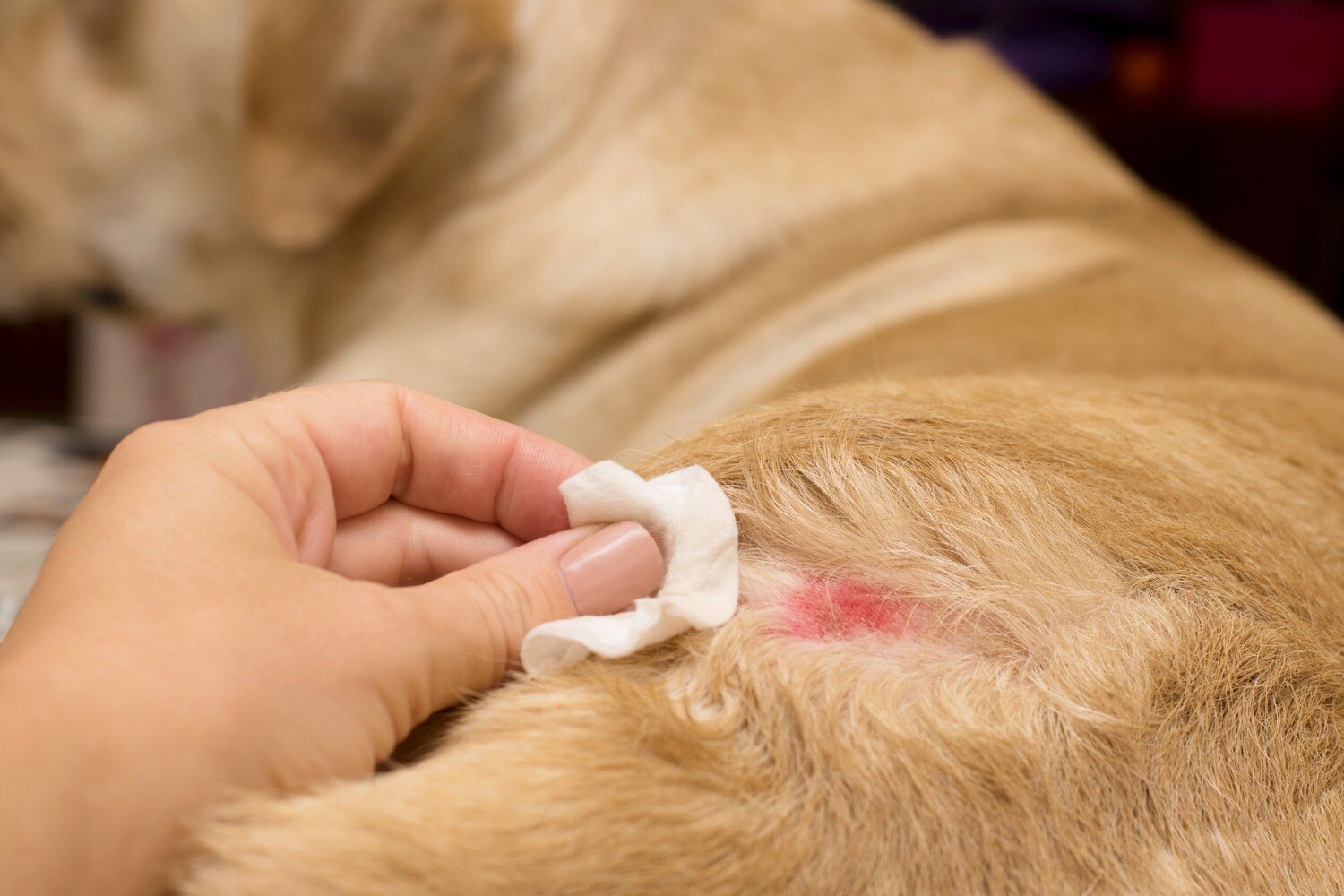
3. Dry skin folds, paws, and other damp areas completely. Apply creams, sprays, ear medication, or wound products only to the cleaned area, and prevent licking when instructed. Dog topical treatment safety matters because licking can remove the medicine or cause illness.
4. Give oral medicines at the prescribed intervals. Complete dog antibiotics and antifungals unless the veterinarian changes the plan; never restart treatment with leftover steroids, human creams, or old antibiotics.
5. During an elimination diet trial, provide only the prescribed food: no treats, table food, flavoured medicines, chews, or another animal’s bowl.
Wash bedding and vacuum resting areas for flea or ringworm concerns. Photograph lesions weekly and record scratching, odour, stools, appetite, and doses so relapse is visible.
When does recurring skin disease require a complete veterinary plan?
Book a veterinary dermatology appointment when infections return, hair fails to regrow, treatment helps only briefly, lesions spread, or ears and paws stay itchy. Repeated antibiotics, antifungals, or steroids signal that a recurring dog skin infections cycle needs investigation, not another leftover product.
Bring every medication and shampoo, product labels, flea-control records, diet and treat lists, earlier-flare photographs, and dates of improvement or relapse. Ask which diagnosis is being tested, whether cytology or skin scraping is needed, when culture is appropriate, how long treatment continues, and what finding triggers a dog skin treatment follow-up.
Pet Care Hospital- Best Pet Clinic in Dwarka can be useful when one appointment needs to connect the skin, ears, paws, parasite history, laboratory testing, and follow-up plan instead of treating each rash separately.
Use the appointment to clarify:
- The likely trigger: parasites, infection, allergy, food sensitivity, hormonal disease, or immune disease.
- The dog hair regrowth timeline, because itching may improve in days while coat recovery takes weeks or months.
- The monitoring target: comfort, infection control, and coat recovery.
| Pattern | Why a complete plan matters | What to ask |
|---|---|---|
| Returning infections | The trigger may remain untreated | Is culture needed? |
| Brief improvement | Medication may be masking disease | What confirms the diagnosis? |
| Spreading lesions or persistent itch | Infection or allergy may be worsening | When is recheck due? |
Return sooner for pain, pus, fever, weakness, bleeding, facial swelling, breathing difficulty, or extensive peeling.
Related service
Veterinary Dermatology & Skin Care Veterinary Dermatology & Skin Care At Pet Care Hospital with Dr. Satish, veterinary dermatology focuses on keeping your pet’s skin and coat healthy, comfortable, and free from... View service → |
Frequently asked questions
Which itchy-skin signs need urgent veterinary care?
Seek prompt care for rapidly spreading redness, pus, open wounds, severe pain, facial swelling, breathing trouble, fever, lethargy, or nonstop scratching. Tail-base irritation, flea dirt, and chewing suggest flea allergy dermatitis, but appearance alone cannot confirm the cause.
How does a veterinarian investigate recurring skin disease in dogs?
The veterinarian reviews the pattern, season, diet, parasite prevention, previous medicines, and household exposures, then examines the skin and ears. Tests can include flea combing, skin scrapings for mites, tape cytology for yeast or bacteria, fungal testing, bacterial culture, and blood tests when an internal disorder is suspected.
What treatments target the cause of a dog’s itchy skin?
Treatment depends on the confirmed cause. It can include reliable flea and mite control, antifungal or antibiotic treatment for documented infections, allergy management, dietary trials, treatment for hormonal disease, and anti-itch medicine as part of—not a substitute for—the underlying plan.
How should you use medicated shampoos and topical treatments at home?
Use the prescribed product, dilution, frequency, and contact time. Wet the coat thoroughly, massage shampoo onto affected skin, keep it out of the eyes and mouth, rinse completely unless directed otherwise, dry the coat, and prevent licking of topical medicines.
When does recurring skin disease require a complete veterinary plan?
Ask for a full plan when itching returns after treatment, infections recur, hair loss expands, ears are repeatedly affected, or medicines only provide brief relief. The plan should identify triggers, address parasites and infections, set recheck dates, and define what to do if signs return.