

Your puppy’s first veterinary appointment is more than a vaccine stop: it creates a health baseline, checks for problems that are easy to miss at home, and turns uncertain adoption or birth information into a care plan. By the end of the visit, you should know what to bring, what the veterinarian will examine, which preventive treatments are due, and when your puppy needs to return.
Key takeaways
- Schedule the first appointment within a few days of bringing your puppy home.
- Bring adoption, vaccination, deworming, medication, and diet records.
- Keep your puppy secure in a carrier or on a leash before and during check-in.
- Ask for clear dates for vaccines, parasite control, tests, and the next examination.
How to Prepare Your Puppy Before Leaving Home
Schedule the first appointment within a few days of bringing your puppy home, rather than waiting for the first booster. Good puppy first vet visit preparation reduces stress and helps the veterinarian assess illness, parasites, congenital problems, and early care needs.
- Let your puppy toilet before leaving, then offer the usual meal unless the clinic gives different instructions. Do not fast a young puppy on your own; confirm whether fasting is required for a planned blood test, sedation, or other procedure.
- Transport the puppy in a secure carrier lined with a washable towel. If a carrier is impractical, use a properly fitted puppy harness and a short leash; never rely on a loose collar during travel.
- Keep the puppy away from unfamiliar dogs, shared outdoor toilet areas, and crowded pet facilities until the veterinarian explains which exposures are safe. Carry the puppy through the waiting area if possible, while still providing calm, positive exposure to people and handling.
- Bring a small amount of familiar food and high-value treats for rewards, especially if the journey is long. Avoid introducing a large meal, new treats, or strenuous play immediately before the examination.
- If your puppy has vomiting, persistent diarrhea, coughing, poor appetite, unusual sleepiness, or breathing trouble, tell the clinic before arrival so staff can advise you about entering the facility and urgent care.
What to Bring and What Happens at Check-In
Bring every document and detail that can establish your puppy’s history, even if the information seems incomplete. Adoption records or breeder records can confirm the birth date, parentage, source, and previous care.
Also carry the vaccine certificate, deworming dates, medication names and doses, current food brand and feeding amount, and a fresh stool sample if the clinic requested one.
| Record or detail | What the team uses it for | If you do not have it |
|---|---|---|
| Adoption records | Source, birth date, and prior care | Give the rescue’s name and estimated age |
| Breeder records | Birth date, litter history, and treatments | Provide the breeder’s contact details |
| Vaccine certificate | Vaccine names, dates, and next due dates | Ask the previous provider to send it |
| Deworming dates | Timing of parasite treatment | State the product name or say when it is unknown |
| Medication and diet details | Safe dosing and feeding advice | Bring photos of labels or food packaging |
At check-in, staff will record your name and contact details, then ask about the puppy’s name, age, breed or mix, sex, source, microchip status, diet, household history, and reason for the visit. They will also obtain a current weight.
Mention vomiting, diarrhoea, coughing, poor appetite, unusual tiredness, or any change since adoption; these details can change which assessments the veterinarian prioritises.
The Nose-to-Tail Examination and Age Assessment
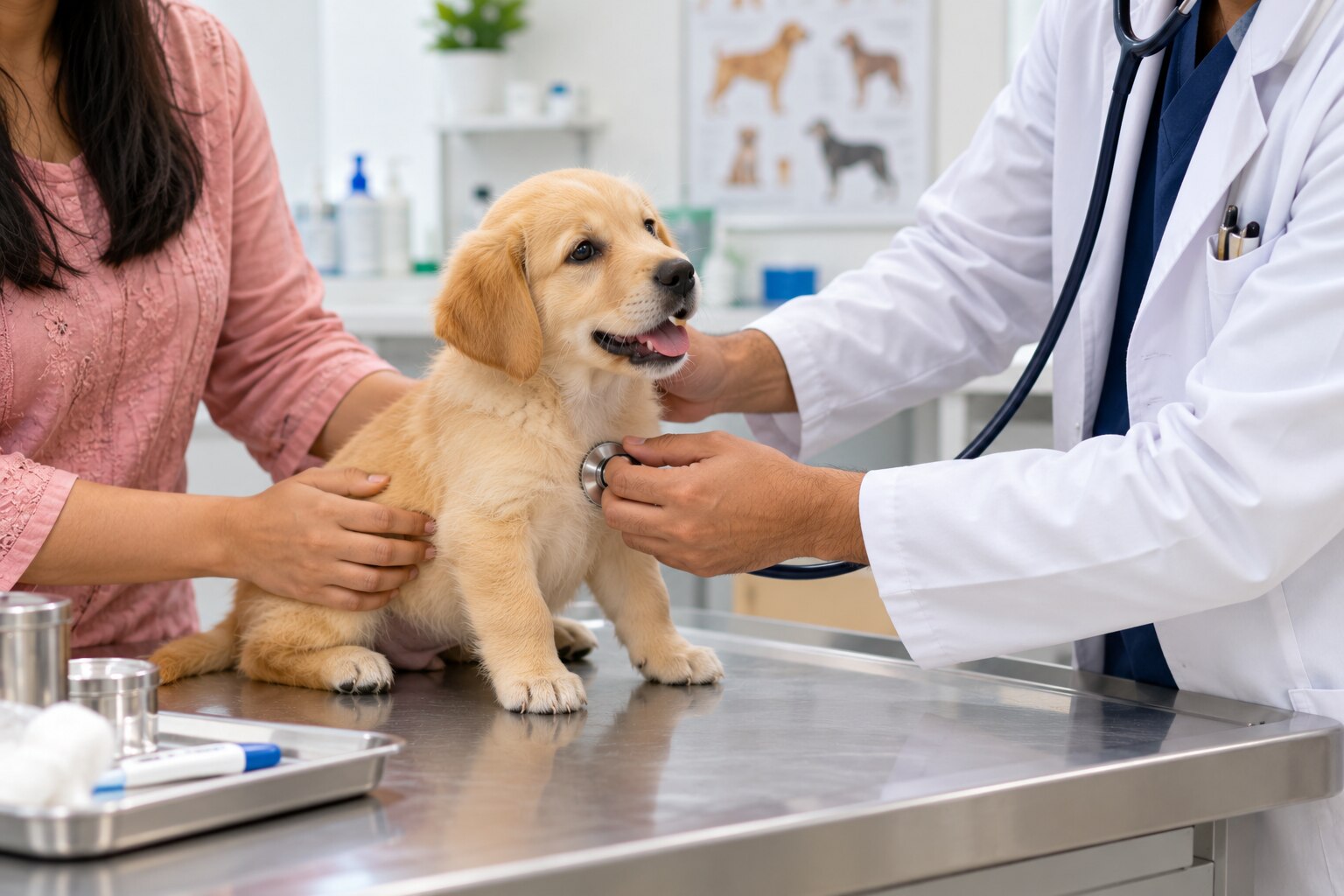
A puppy physical examination runs from nose to tail, starting with temperature, puppy weight, hydration, and body condition. The veterinarian listens to the heart and lungs, then checks:
- Eyes for discharge, cloudiness, or abnormal structure
- Ears for infection, mites, inflammation, and response to sound
- Mouth, teeth, gums, and bite
- Skin and coat for fleas, wounds, rashes, and hair loss
- Abdomen for pain, enlargement, or an umbilical hernia
- Joints, paws, spine, and gait for orthopedic abnormalities
- Genitalia for normal development and, in males, whether both testicles have descended
- Lymph nodes for enlargement
This hands-on check can uncover congenital problems, a heart murmur, parasites, or illness even when the puppy appears lively and healthy.
If the birth date is uncertain, the veterinarian estimates age rather than relying on size alone. They compare tooth eruption and wear with the puppy’s physical development, including coordination, muscle development, eye changes, and expected growth for its breed or mix.
Puppy teeth provide useful clues, but nutrition and breed affect timing, so the estimate is a range.
Adoption records, breeder notes, shelter paperwork, or an earlier veterinary record can narrow that range. Ask the veterinarian to record the estimated age and the evidence used; that date helps determine vaccine timing, parasite treatment, nutrition, and follow-up examinations.
Vaccines, Deworming, and Tests Discussed at the Visit
The veterinarian will recommend preventive care based on your puppy’s age, weight, records, parasite risk, and health findings. Core canine vaccines are given as a series because maternal antibodies can weaken an early dose; distemper adenovirus parvovirus parainfluenza protection is commonly started at 6–8 weeks and repeated every 2–4 weeks until at least 16 weeks.
| Preventive item | What may be discussed | When it applies |
|---|---|---|
| Core canine vaccines | Combination protection against distemper, adenovirus, parvovirus, and parainfluenza | Begin at 6–8 weeks; repeat until a dose is given at 16 weeks or later |
| Rabies vaccine | Required timing, product label, and local law | Often at 12 weeks or older; it may not be due at the first visit |
| Puppy deworming | A dewormer schedule and fecal examination for roundworms, hookworms, Giardia, or other parasites | Especially when records are missing, symptoms exist, or the puppy has parasite exposure |
| Heartworm prevention | A monthly or long-acting preventive, weight-based dosing, and testing requirements | Puppies under 7 months can generally start without a pre-treatment test; older dogs may need testing first |
Bring a fresh stool sample if the clinic requests one. The veterinarian may recommend a fecal test even when the puppy looks healthy, because intestinal parasites can cause diarrhea, poor growth, or infection in people.
Ask which environments are safe before the vaccine series is complete. Positive socialization with healthy, vaccinated dogs is useful, but dog parks, crowded pet areas, and unknown dogs carry higher contamination risk. Blood tests are usually reserved for illness, abnormal examination findings, or a specific medication concern.
How the Veterinarian Sets Follow-Up Dates and Home-Care Priorities
Leave with a written plan, not just a vaccine sticker. Ask for the next appointment date, what it will cover, and which changes require an earlier call.
The puppy vaccine schedule usually includes 3 to 4 week boosters until the veterinarian judges the primary series complete; record rabies timing separately because local law and product labeling control it.
- The next vaccine and examination dates, including the age or weight target for each visit.
- The heartworm prevention product, starting date, dose changes as your puppy grows, and the testing date required by that product and the puppy’s age.
- Deworming or stool-test follow-up, especially if diarrhea, poor appetite, or failure to gain weight continues.
- Home instructions for puppy nutrition and socialization: feeding amounts, weight checks, safe handling practice, and which parks, pet shops, or unknown dogs to avoid until protection is adequate.
- Recheck or urgent-call triggers, such as repeated vomiting, breathing difficulty, marked lethargy, persistent diarrhea, or refusal to eat.
Ask when to revisit spaying or neutering, since timing depends on sex, breed, adult size, orthopedic risk, and health rather than a universal puppy age.
If the baseline exam shows poor growth or ongoing illness, Pet Care Hospital- Best Pet Clinic in Dwarka can use targeted diagnostic testing to determine whether the routine follow-up plan needs changing.
Related service
Pet Vaccinations & Immunisation Pet Vaccinations & Immunisation Keep your beloved pet protected with professional Pet Vaccinations & Immunisation at Pet Care Hospital with Dr. Satish. View service → |
Frequently asked questions
When should a puppy have its first veterinary visit?
Schedule the appointment within a few days of bringing your puppy home instead of waiting for the first booster.
What should I bring to my puppy’s first vet appointment?
Bring adoption or breeder records, vaccination and deworming details, medication information, diet details, and a fresh stool sample if requested.
What happens during a puppy’s first examination?
The veterinarian performs a nose-to-tail examination, assesses your puppy’s age and condition, and checks for illness, parasites, congenital problems, and care needs.
What will the veterinarian discuss at the first puppy visit?
The discussion covers vaccines, deworming, diagnostic tests, home-care priorities, and dates for follow-up appointments.