

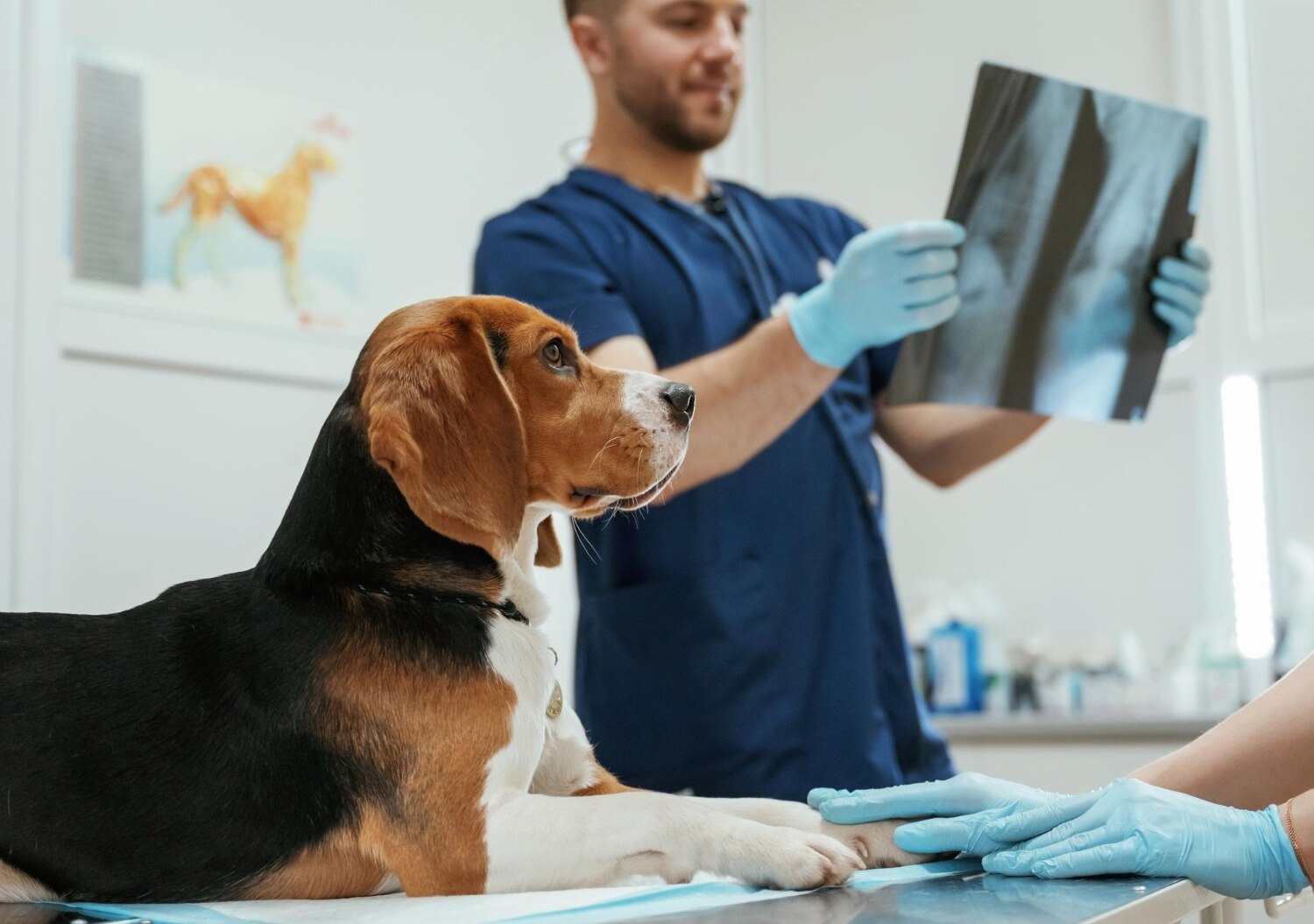
A limp can reflect anything from a torn nail to a fracture, unstable knee, painful arthritis, or a spinal problem, and pets often hide pain until movement becomes difficult. By using clear urgency thresholds and observing the pattern of movement, you can decide whether to seek emergency care, book a routine veterinary examination, or ask for an orthopedic referral.
Key takeaways
- Treat sudden inability to stand, severe pain, or an open fracture as an emergency.
- Check paws for cuts, swelling, thorns, torn nails, and embedded foreign objects.
- Restrict running and jumping; do not give human painkillers.
- Seek orthopedic referral for persistent lameness, suspected ligament injury, or abnormal imaging.
When does limping require emergency care, a prompt appointment, or short home monitoring?
Use a three-level triage guide for a pet limping emergency:
- Seek same-day emergency care if your pet cannot bear weight, has a visibly deformed limb, an open wound over a joint or bone, severe or rapidly worsening pain, severe swelling in pets, a hot joint, persistent crying, collapse, fever, or lameness after a road accident, fall, bite, or other major trauma.
- Treat dragging a limb, knuckling, crossing the legs, sudden weakness, or loss of bladder or bowel control as urgent signs of possible spinal or nerve disease. Do not wait for these signs to worsen.
- Arrange a veterinary appointment within 24 to 48 hours when a mild limp lasts about 24 hours, returns after exercise, or comes with stiffness, swelling, reduced activity, or reluctance to climb. Dogs and cats often compensate for pain, so waiting for complete non-weight-bearing can delay diagnosis.
Brief home monitoring is reasonable only when the limp is mild and already improving, with no wound, swelling, neurological sign, or major trauma. Restrict running, jumping, stairs, and rough play during this period, and use leash-only toilet breaks. Stop monitoring and book an examination if the limp returns.
Temporary improvement does not prove healing. Progressive cranial cruciate ligament disease can cause intermittent hind-leg lameness before a partial tear becomes a complete rupture.
What signs point to a paw problem, joint disease, fracture, or neurological condition?
The pattern can suggest where pain starts, but only an examination can distinguish these problems reliably.
| Pattern | Signs you may observe | What it can suggest |
|---|---|---|
| Paw injury in dogs and cats | Focused licking, sudden pain when one paw touches the ground, or reluctance to place it down | Torn nail, cut pad, thorn, or another foreign body |
| Muscle strain | Mild limp linked to activity, without swelling or deformity | Soft-tissue injury |
| Ligament injury | Recurrent lameness, difficulty rising, or an unstable-feeling knee | Cranial cruciate ligament disease in dogs can begin as intermittent hind-leg lameness |
| Fracture or dislocation | Sudden refusal to bear weight, marked swelling, abnormal alignment, or pain after trauma | Urgent structural injury; appearance cannot confirm or exclude it |
| Arthritis symptoms in pets | Stiffness after rest, slower walks, reluctance to jump, or reduced activity | Arthritis or another chronic joint problem |
| Hip or elbow disease | Exercise intolerance and an altered gait | Developmental or degenerative joint disease |
| Patellar luxation | A brief skipping step that stops when the kneecap returns to position | A kneecap tracking problem |
| Neurological condition | Dragging a limb, knuckling, crossed legs, weakness, or altered gait without obvious joint swelling | Spinal or nerve disease |
Cats often hide pain through hiding, irritability, reduced grooming, lower jumps, changed stair use, or litter-box accidents rather than a visible limp. A cat does not need to limp before assessment.
Arrange earlier evaluation for puppies and kittens: growth-plate injury can cause abnormal limb development even when they keep playing.
What can you safely do before the veterinary appointment?
For what to do for a limping pet, start with strict activity restriction until the appointment. Use leash rest for dogs: lead-only toilet breaks, no running, jumping, rough play, or stairs, and keep the pet on a non-slip floor.
- Check paw pads and nails only if your pet remains calm and does not struggle. Stop immediately if inspection causes pain.
- Record a short walking video from the side and from behind, before excitement or rest changes the gait. Note when the limp began, which limb seems affected, whether it improves or returns after exercise, and any fall or collision.
- Do not give human painkillers toxic to pets, including ibuprofen, diclofenac, naproxen, or paracetamol, without veterinary direction. They can cause gastrointestinal, kidney, liver, or blood toxicity; paracetamol is especially dangerous for cats.
| Action | Safe approach | What can worsen injury |
|---|---|---|
| Joint check | Observe without forcing movement | Do not force a painful joint through its range |
| Suspected fracture | Keep the limb still | Do not massage it |
| New swelling | Leave it undisturbed | Do not apply heat |
For pet transport after injury, support the chest and pelvis together without twisting the painful limb. Remove the top of a carrier for a small pet; if spinal injury is possible, slide the pet onto a firm board or flat support and minimise back movement.
When is an orthopedic referral more useful than routine observation or initial treatment?
Move to a veterinary orthopedic referral when limping persists after initial treatment, the diagnosis remains uncertain, or the case may need surgery, specialist imaging, or complex anesthesia planning.
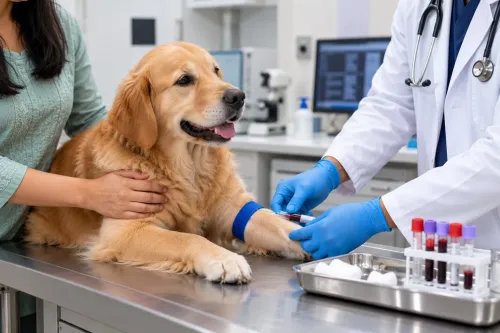
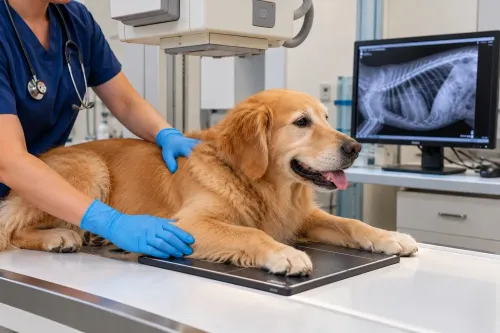
A primary-care veterinarian can usually examine gait and joints, inspect paws and nails, prescribe species-appropriate analgesia, and order pet X-rays for limping when indicated. Persistent lameness means it lasts beyond roughly 24 hours, returns after apparent improvement, or repeatedly follows exercise. Do not wait for complete non-weight-bearing.
Ask about referral when:
- The limp continues despite rest and prescribed treatment.
- The injury involves a joint or growth plate, especially in a puppy or kitten.
- Surgery appears likely, or you need a second opinion on a proposed operation.
- The cause remains unclear after examination and initial radiographs.
- Your pet has heart, kidney, liver, respiratory, or other conditions that increase anesthetic risk.
- Advanced imaging for joint problems is needed to assess structures that X-rays cannot show.
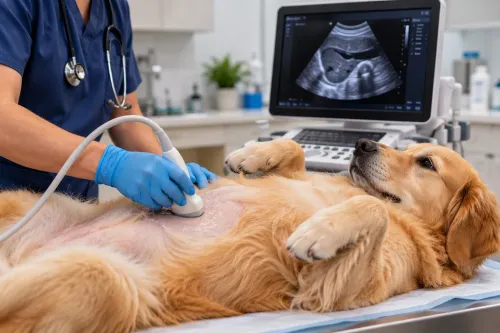
A normal or mildly abnormal X-ray does not rule out a torn ligament, meniscus, tendon, cartilage lesion, or early joint disease. Radiographs show bones, alignment, fractures, osteoarthritis changes, and joint effusion; ultrasound, CT, MRI, arthroscopy, or joint-fluid analysis may be needed for other problems.
A first consultation at Pet Care Hospital- Best Pet Clinic in Dwarka can help determine whether initial findings are sufficient or specialist-level planning is warranted.
What should you consider before agreeing to orthopedic surgery?
A specialist recommendation starts a pet orthopedic surgery decision, not automatic consent. For clinically important cranial cruciate disease, surgery often controls knee instability more reliably than rest alone and can reduce ongoing joint damage. Ask which diagnosis is confirmed and what instability, meniscal injury, or other tissue damage is present.
| Option | What it does | What affects the choice |
|---|---|---|
| TPLO | Changes the knee’s mechanics to stabilise it during weight-bearing | Body weight, anatomy, activity goals, surgeon experience |
| TTA | Advances the tibial tuberosity to improve functional stability | Knee anatomy, activity demands, surgeon experience |
| Extracapsular stabilization | Uses an external suture to limit abnormal movement | Patient size, activity level, tissue strength, expected demands |
| Nonoperative management | Combines restricted activity, pain control, weight management, and rehabilitation | Mild disease, lower activity goals, concurrent illness, or surgical constraints |
The TPLO versus TTA decision is only one part of the discussion. Cover anesthesia, infection, implant failure, meniscal injury, pain control, rehabilitation, cost, expected time away from normal activity, and what ongoing instability could mean if you choose rest.
An orthopedic specialist consultation can clarify difficult radiographs, provide a second opinion, and explain the likely limits of conservative care. Bring:
- A walking video
- The medication list and prior radiographs or reports
- Previous treatment response
- Your pet’s normal activity goals
The final plan must also account for age, concurrent disease, surgeon experience, body weight, anatomy, and your ability to manage confinement and follow-up care.
Frequently asked questions
When does a limping pet need emergency care?
Seek emergency veterinary care for a pet that cannot stand or bear weight, has severe or escalating pain, an obvious fracture or dislocation, uncontrolled bleeding, a deep wound, sudden paralysis, or pale or blue gums. Call the clinic before travel if the pet is in extreme distress.
When can I monitor a pet’s limp at home?
Short home monitoring fits only a mild limp in an otherwise comfortable pet that still bears weight and has no swelling, wound, deformity, fever, or neurological signs. Restrict activity and arrange a veterinary appointment if the limp lasts beyond 24 hours, worsens, or returns.
How can I tell whether limping comes from the paw or a joint?
Inspect the paw pads, spaces between toes, nails, and lower leg for cuts, thorns, burns, swelling, or a torn nail. Joint or bone problems cause pain higher in the limb, stiffness after rest, swelling around a joint, reduced range of motion, or reluctance to climb and jump. A veterinary examination is needed to distinguish these causes reliably.
What should I do before the veterinary appointment?
Keep your pet confined to a small room, use leash-only toilet breaks, prevent stairs and jumping, and take a short video of the limp. Do not massage the limb, force joint movement, remove a deeply embedded object, apply heat, or give ibuprofen, paracetamol, aspirin, or other human medicines unless a veterinarian directs you.
When is an orthopedic referral useful for a limping pet?
Referral helps when lameness persists after initial treatment, imaging suggests a fracture or ligament injury, the joint is unstable, the diagnosis remains unclear, or the pet has recurrent or performance-limiting pain. An orthopedic specialist can assess advanced imaging, non-surgical options, surgical timing, rehabilitation, and likely recovery.