
Choosing a clinic requires more than finding one with a convenient address or a long service list. Use a weighted comparison, verify how routine visits and diagnostic tests actually work, and confirm what happens when your pet needs care after hours or transfer to a critical-care hospital.
Key takeaways
- Score access, staff, species experience, and infection control from zero to three.
- Ask who performs tests, why each test is needed, and when results arrive.
- Confirm emergency hours, after-hours contacts, stabilisation equipment, and referral arrangements.
- Compare written estimates, consent rules, medical records, and referral processes.
Score each clinic on access, staff, species experience, and infection control
Give every provider a score from 0 to 3 before booking, then compare the total and any zero that affects safety. Use this pet clinic comparison checklist for a general veterinary clinic, multispecialty veterinary hospital, and mobile veterinarian comparison.
| Criterion | 0 points | 1 point | 2 points | 3 points |
|---|---|---|---|---|
| Access | Appointment delays; no emergency plan | Limited hours; referral only | Same-week visits; clear referral process | Convenient hours, urgent slots, and after-hours stabilization |
| Staff | No consistent veterinarian or nursing support | Basic staffing; unclear supervision | Named veterinary team and follow-up contact | Experienced team with monitoring, anesthesia, and emergency skills |
| Species experience | Does not treat your species | Treats it but rarely | Regularly treats your species and life stage | Demonstrated experience with your species, breed risks, or exotic needs |
| Infection control | No visible separation or cleaning policy | Basic cleaning; unclear isolation | Separate sick-pet area and documented cleaning | Isolation, hand hygiene, equipment disinfection, and controlled patient flow |
Ask who receives emergencies after closing, whether that hospital is staffed overnight, and how current medications and records transfer. A mobile provider can score highly for access to a fearful or immobile pet but cannot replace a hospital for imaging, surgery, oxygen, or overnight monitoring.
Before choosing, inspect the waiting and treatment areas. Look for clean, intact surfaces; separate dog and cat waiting options; sharps containers; and an isolation area for suspected contagious disease. Treat an unexplained zero in emergency access or infection control as a reason to keep searching.
Verify what routine care looks like between visits
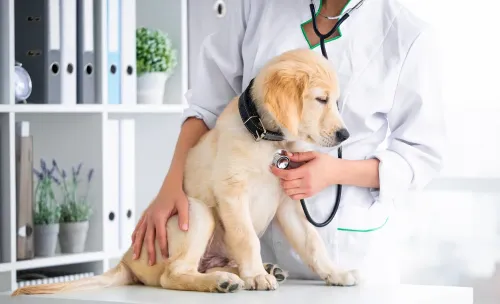
At a routine pet check-up, the veterinarian should assess your animal’s current health, update a preventive plan, and explain what happens before the next appointment—not simply administer a vaccine. Recommendations should reflect your pet’s age, lifestyle, housing, travel, animal contact, and local disease risks.
The visit should cover:
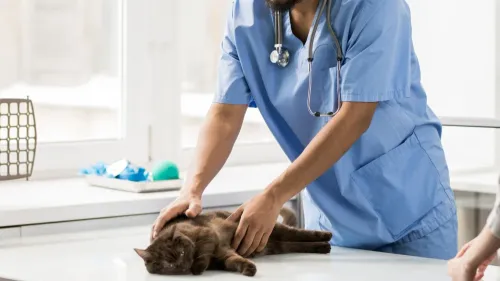
- Weight, body condition, temperature, heart and breathing, skin, eyes, ears, mouth, abdomen, joints, and behavior.
- Vaccination record review, with an explanation of which vaccines are due and why.
- A parasite control plan for fleas, ticks, intestinal worms, and heartworm based on exposure risk.
- Dental screening, including whether suspected disease requires anesthetized probing and dental radiographs.
- A discussion of screening tests such as a complete blood count, serum biochemistry, urinalysis, or fecal testing, including whether each is performed in-house or sent to an outside laboratory.
Follow-up is part of care. The clinic should provide a written medication plan, warning signs, test-result timeline, and a defined date or trigger for reassessment. Ask who reviews results and how you receive them; silence after an abnormal result is a safety failure.
Between visits, confirm how to request advice, renew prevention, arrange weight checks, and book a sick-pet appointment. A clinic that places every animal into an identical annual package is offering convenience, not individualized preventive veterinary care.
Ask exactly how tests are selected, performed, and reported
A suitable clinic can explain why a test is needed, where it is performed, when you will receive the result, and what happens next—not simply display a laboratory logo.
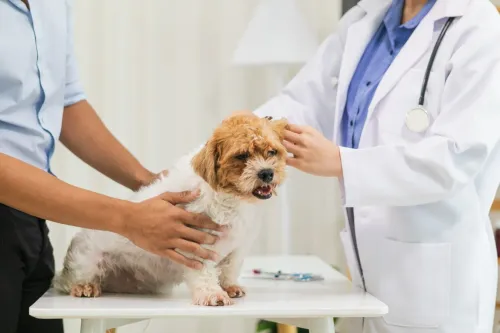
1. Ask how the examination determines the test. The veterinarian should connect symptoms, age, species, and medical history to specific veterinary diagnostic tests. Ask when CBC and serum biochemistry are useful, when urinalysis and fecal testing are appropriate, and when skin testing or another investigation is better than guessing.
2. Ask where each test is done. Confirm whether bloodwork, veterinary X-ray, ultrasound, and ECG are performed in-house, sent to an outside laboratory, or referred elsewhere. Request the turnaround time for each. In-house results matter when your pet is unstable or treatment cannot wait several days.
3. Ask how results are reported and acted on. A useful report identifies the sample, provides reference intervals and abnormal findings, and includes the veterinarian’s interpretation rather than leaving you to decode numbers.
Ask whether results arrive by phone, email, or an app; whether you receive copies; and whether records and images transfer electronically to a referral hospital.
For anesthetized procedures, ask who continuously monitors oxygenation, ventilation, circulation, blood pressure, ECG, temperature, and recovery. Vague answers about “standard monitoring” are a reason to compare another clinic.
Test emergency capability before an emergency occurs
Ask before admission: “Who provides veterinary emergency support when you close, and is that hospital staffed overnight?” A listed referral is not enough. Confirm whether the receiving team accepts patients immediately, whether your clinic can stabilize your pet before transfer, and who remains responsible for follow-up.
Use this checklist:
- Does your clinic provide pet emergency triage by phone, in person, or both?
- Can you start oxygen therapy and IV fluids, control seizures, provide pain relief, and monitor a critical patient while arranging transfer?
- Which referral hospital handles advanced imaging, complex surgery, or intensive care?
- Are its veterinarians and specialists on site overnight?
- Will you send examination notes, laboratory results, radiographs, ultrasound images, medication names, and doses electronically?
- Who calls the receiving hospital, and who updates me if the diagnosis changes?
- During anesthesia, who monitors oxygenation, ventilation, blood pressure, ECG, temperature, and recovery?
| The clinic’s answer | What it reveals | Your decision |
|---|---|---|
| “We stabilize and transfer” | Ask what equipment and staff are available before transport. | Suitable if the process is specific. |
| “Call the referral hospital” | The clinic may offer no after-hours veterinary care or critical support. | Plan transport independently. |
| “The doctor decides case by case” | No defined pet emergency triage pathway. | Treat as a transfer-first provider. |
Ask Pet Care Hospital- Best Pet Clinic in Dwarka these same questions; the answers about overnight staffing, stabilization, records, and referral ownership matter more than the clinic’s service list.
Related services
Veterinary Diagnostic Services for Pets Veterinary Diagnostic Services for Pets Get reliable Veterinary Diagnostic Services for Pets at Pet Care Hospital with Dr. View service → |
Pet Vaccinations & Immunisation Pet Vaccinations & Immunisation Keep your beloved pet protected with professional Pet Vaccinations & Immunisation at Pet Care Hospital with Dr. Satish. View service → |
Compare estimates, consent rules, records, and referral logistics
Before booking, ask for a sample written estimate and the clinic’s payment rules. The estimate should separate veterinary consultation fees, examination, diagnostics, treatment, hospitalization, anesthesia, medications, and referral costs. Ask what happens if test results change the plan, whether a deposit is required, and whether insurance forms are completed.
| Item | Ask before choosing | Why it matters |
|---|---|---|
| Estimate | Which services are included, excluded, or billed separately? | A low estimate can hide hospitalization or medication charges |
| Authorization | What spending limit applies without a new approval? | Treatment can pause during a time-sensitive emergency |
| Diagnostics | Which blood tests, X-rays, ultrasound, and ECGs are in-house? What is the outside-laboratory turnaround? | Delayed results can delay treatment |
| Referral | Which overnight hospital receives patients, and who sends records? | A referral is weaker if transfer details are improvised |
Ask the veterinary consent process before any procedure: who explains risks, pain control, alternatives, recovery, and additional-cost approval? Confirm preoperative, discharge, and reassessment plans rather than waiting for visible discomfort.
Request complete pet medical records and referral documents, including laboratory reports, imaging reports and images, vaccine history, medication lists, and procedure notes. Confirm whether the clinic exports them electronically and who handles follow-up after a specialist visit.
Also ask whether the receiving hospital is staffed overnight and whether the clinic can stabilize your pet before transfer.
Frequently asked questions
How should I compare different pet clinics?
Score each clinic from 0 to 3 for access, staff, species experience, and infection control. Compare the totals and treat any safety-related zero as a warning.
What should routine pet care include between visits?
Ask how the clinic handles vaccination reminders, parasite prevention, weight tracking, dental checks, follow-up questions, and ongoing treatment monitoring.
What should I ask about diagnostic testing?
Ask why a test is needed, who performs it, where samples are processed, how results are reported, and how quickly the veterinarian will discuss them with you.
How can I check a clinic's emergency capability?
Ask about emergency hours, after-hours phone support, triage, oxygen, intravenous fluids, monitoring, stabilisation, and the hospital used for referrals.
What should I compare in clinic estimates and records?
Compare itemised estimates, consent requirements, payment stages, access to medical records, test reports, prescription details, and referral arrangements.
Related service
Veterinary Surgery At Pet Care Hospital in Dwarka Sector 7, veterinary surgery is provided with a focus on safety, precision, and compassionate care. View service → |