

The best veterinary doctor is not simply the one with the longest list of services. You need a clinician and clinic equipped for your pet’s species, age, medical needs, temperament, budget, and likely follow-up—and you need to know how they handle care beyond their own scope.
Key takeaways
- Match the veterinarian’s species and breed experience to your pet’s needs.
- Verify registration, training, and access to specialist referrals.
- Use the first consultation to assess clinical judgment and communication.
- Confirm emergency cover, fees, records access, and follow-up arrangements.
Match the Veterinarian to Your Pet’s Actual Needs
The best veterinarian for your pet is the doctor whose skills, approach, and availability match that animal’s needs. A good veterinarian-pet fit includes species and breed experience, comfort with your pet’s temperament, and a plan suited to its life stage rather than a standard package for every patient.
Ask these questions before choosing:
- How frequently do you treat this species, breed, and age group?
- How do you adapt preventive care to lifestyle, travel, exposure risk, and previous vaccine reactions?
- How do you handle pet age and chronic disease care, including laboratory trends and scheduled follow-ups?
- Who reviews results, how quickly are abnormalities communicated, and can another veterinarian receive the complete medication list, imaging, and records?
- How do you manage pain before surgery or during chronic illness, including monitoring, medication instructions, and signs of uncontrolled pain?
A capable primary-care veterinarian does not need to perform every advanced procedure. Ask how the practice refers cases needing specialist consultation, overnight hospitalization, advanced imaging, or emergency surgery, and whether it transfers complete records promptly. A low consultation fee loses its value when poor follow-up causes repeated tests or delayed treatment.
Observe your pet’s response, too: fearful animals need calm handling, while anxious owners need clear explanations and reachable follow-up.
Verify Registration, Training, and Referral Capability
Check your veterinarian’s active registration with the relevant State Veterinary Council or official Indian register. Veterinary registration in India is a legal baseline, not proof of expertise in every condition. Ask for the registration number and verify it through the council’s online directory or office.
Review the veterinarian qualifications for your pet’s needs. Ask where the doctor earned a BVSc and AH or equivalent degree, whether they completed a veterinary internship, how long they have treated your species, and whether additional training covers your pet’s condition.
For a veterinarian in India, residency training and overseas specialist programmes require confirmation of the specialty and institution.
Before booking or authorising treatment, ask:
- Who will manage this case if it needs oncology, cardiology, neurology, orthopaedic surgery, advanced imaging, or intensive monitoring?
- Which referral hospital or specialist receives cases?
- Will the clinic send examination notes, medication lists, laboratory results, images, and discharge instructions promptly?
- Who provides overnight care, and what exact number and destination should you use after hours?
- Who reviews laboratory trends and schedules rechecks for chronic disease?
A referral is appropriate when diagnosis remains uncertain, treatment fails, surgery is unusually complex, or your pet needs equipment or overnight staffing the clinic lacks. A capable primary veterinarian recognises that boundary and transfers complete records without delay.
Use the First Consultation to Test Clinical Judgment and Communication
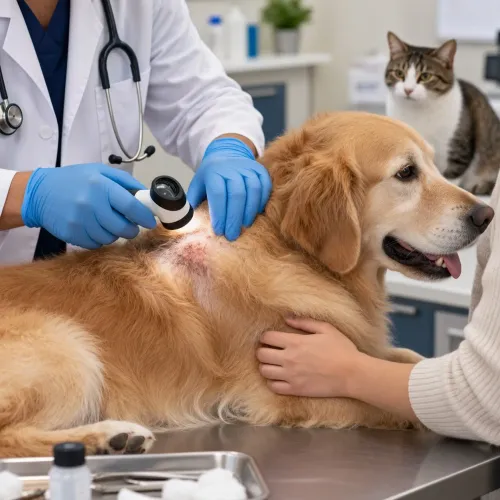
Ask for the likely diagnosis, the evidence behind it, and the serious alternatives that must be ruled out. A high-quality explanation connects each examination step or test to a decision: “This blood test checks kidney function before this drug; if the result is abnormal, we will choose another option.” It acknowledges uncertainty without hiding it.
Use these questions to ask a veterinarian:
- What is the likely diagnosis, and which findings support it?
- What treatment alternatives exist, including watchful monitoring or referral?
- What is the prognosis and follow-up schedule?
- Which signs mean I should seek emergency care, and whom do I contact after hours?
- What is the total expected cost, including rechecks, medication, and testing?
- Who will review laboratory trends if my pet has a chronic condition?
- How will you provide medication lists, laboratory results, and imaging to another veterinarian?
Listen for trade-offs rather than confident promises. If a compounded medication is suggested, ask why an approved product or strength is unsuitable; compounded drugs are not FDA-approved and can differ in potency, stability, palatability, and quality assurance. Ask what happens if fear prevents a safe examination.
A careful practice describes treats, quiet handling, minimal-force restraint, pre-visit medication when indicated, or referral instead of forcing the procedure. Clear answers, written instructions, and a defined next step show clinical judgment you can evaluate.
Compare the Clinic’s Equipment, Handling, and Continuity of Care
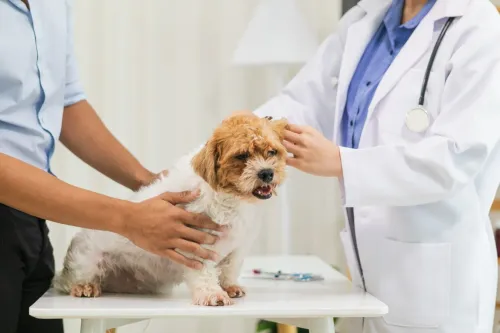
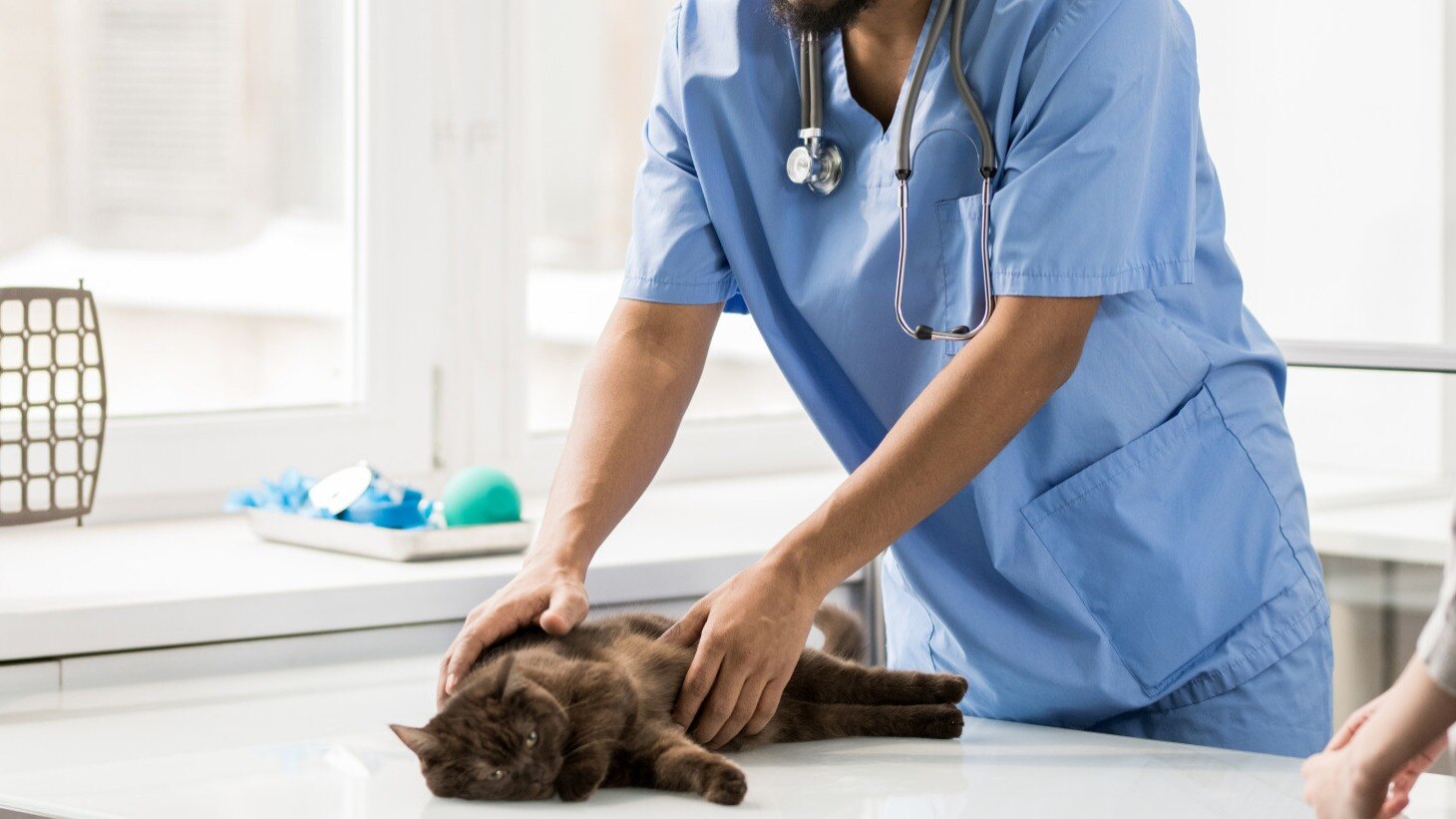
Beyond a doctor’s credentials, compare whether the clinic can examine, diagnose, monitor, and transfer your pet safely. Good handling includes calm restraint, separate dog and cat waiting areas, clean examination rooms, and staff who adjust their approach for fearful, painful, elderly, or aggressive animals. Rough restraint can turn future visits into a struggle.
| Capability | Ask the clinic | Why it matters |
|---|---|---|
| In-house laboratory | Which blood, urine, and faecal tests are run immediately, and when are results communicated? | Delayed or unexplained results can postpone treatment. |
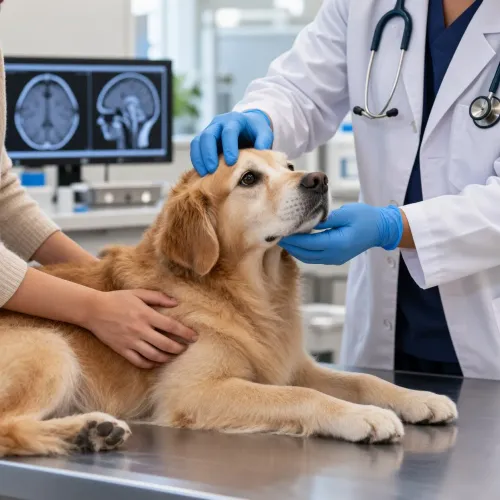
| Diagnostic imaging | Are X-rays, ultrasound, or other scans available, and who interprets difficult images? | A scan is less useful when nobody reviews it with specialist expertise. |
| Surgical monitoring and hospitalisation | Who watches patients overnight, and what equipment records oxygen, blood pressure, temperature, and heart rate? | A procedure is not the whole risk; recovery can become dangerous without continuous observation. |
| Referral and records | How quickly will you receive medication lists, laboratory trends, imaging files, and discharge notes? | Complete records prevent duplicated tests and unsafe prescriptions. |
For chronic disease, ask who reviews laboratory trends and whether the same clinician usually handles follow-ups. Confirm how appointments are scheduled and how records reach another veterinarian if referral becomes necessary; a low consultation fee can be erased by repeated testing and poor follow-up.
In a veterinary clinic comparison, ask Pet Care Hospital- Best Pet Clinic in Dwarka these same operational questions rather than relying on the range of services advertised. The answer should identify responsible staff, turnaround times, after-hours arrangements, and the exact records you receive.
Confirm Emergency Arrangements, Costs, and Long-Term Follow-Up
Choose a veterinarian by testing the plan for the difficult days, not only the routine appointment. Ask who answers after hours, who reviews worsening symptoms, and how the clinic supports treatment that lasts months or years.
- Confirm the exact after-hours phone number, destination hospital, transport arrangements, and whether records transfer automatically.
- Request an itemized veterinary estimate before non-routine care. Check whether it includes monitoring, pathology, specialist interpretation, hospitalization, medicines, and rechecks; ask what could trigger extra charges, when payment is due, and whether a deposit is required.
- Before surgery or treatment for chronic illness, request a pain management plan covering multiple methods, medication instructions, expected pain signs, monitoring, and the action to take if pain remains uncontrolled.
- For chronic disease follow-up, ask who reviews laboratory trends, how appointments are scheduled, whether the same clinician is usually available, and how medication lists and imaging are supplied to another veterinarian.
| Area | Dependable arrangement | Warning sign |
|---|---|---|
| Emergency coverage | Named facility, working phone number, clear transfer process, shared records | “Go to any emergency clinic” with no instructions |
| Costs | Written itemized veterinary estimate with payment terms and exclusions | One total price with no scope or assumptions |
| Ongoing care | Scheduled reviews, trend tracking, accessible records, defined referral pathway | Repeated tests because previous results cannot be obtained |
A low consultation fee can become expensive when poor follow-up causes delays or duplicate testing. Choose the practice that explains its limits and transfers care promptly when overnight monitoring, advanced imaging, specialist treatment, or emergency surgery exceeds its scope.
Frequently asked questions
How do I match a veterinarian to my pet’s actual needs?
Look for experience with your pet’s species, breed, age, temperament, and known health conditions. A veterinarian should adapt preventive care and treatment to the individual animal rather than use the same plan for every patient.
What should I verify before choosing a veterinarian?
Verify the veterinarian’s registration, relevant clinical training, species experience, and ability to refer cases to appropriate specialists when the clinic lacks the required expertise or equipment.
What should I assess during the first consultation?
Assess whether the veterinarian examines your pet carefully, explains likely causes and treatment options clearly, discusses risks and costs, answers questions, and makes decisions based on clinical findings.
What clinic facilities and continuity arrangements should I compare?
Compare diagnostic equipment, patient handling, hygiene, hospitalisation facilities, access to emergency care, medical record continuity, follow-up procedures, and communication between visits.